
Lorenzo Marini
Lorenzo Marini
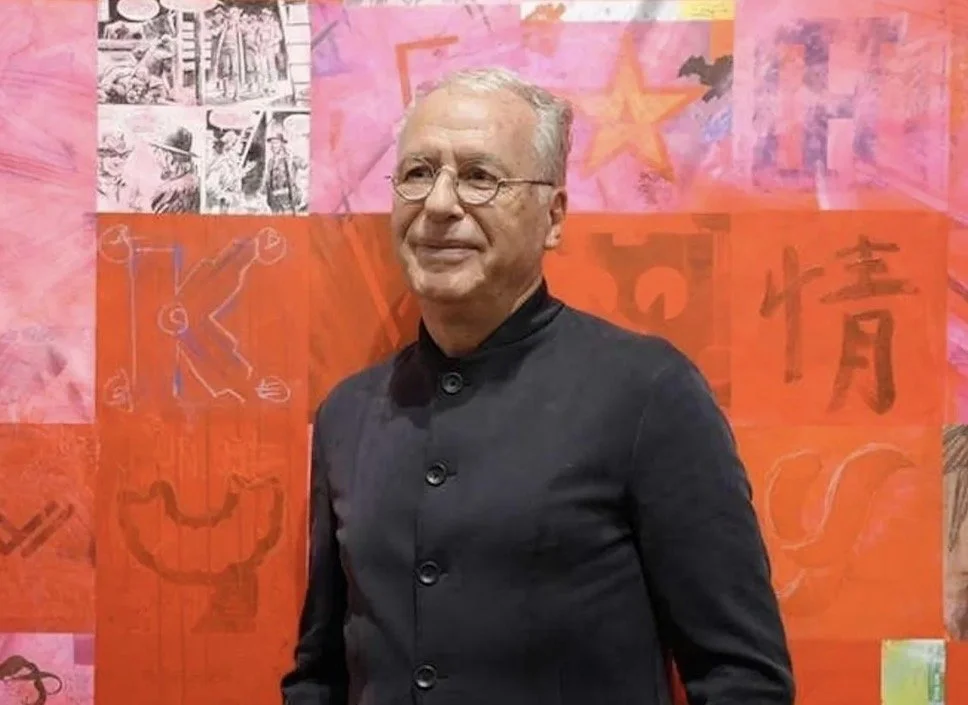
Lorenzo Marini is an Italian artist whose practice explores the relationship between art, space, signs, and language. At the center of his artistic research is the letter, freed from its traditional function of conveying words and transformed into a visual element with its own aesthetic identity.
In 2016, Marini founded TypeArt, an artistic movement that reinterprets typography through painting, sculpture, and installation. Letters become shapes, colors, rhythms, and structures, creating a visual language that exists beyond reading. What is normally perceived as communication becomes an object of contemplation.
A significant body of his artistic research is represented by Raintype, a series in which letters appear to dissolve, multiply, and interact with space, transforming typography into a dynamic visual experience. A work from the Raintype series is part of the collection of the Galleria Nazionale d’Arte Moderna e Contemporanea in Rome, marking an important recognition of Marini’s artistic research within the Italian contemporary art landscape.
His work moves between abstraction and typography, order and freedom, structure and movement. Through projects such as AlphaCUBE, Raintype, Futurtype, and his Blackhole series, Marini progressively expands the letter from the two-dimensional surface into a spatial and immersive dimension.
His research reflects on the transformation of language in contemporary society. In an age dominated by rapid digital communication, the letter is stripped of its purely functional role and rediscovered as an autonomous visual form. Marini’s art therefore invites us to look at language rather than simply read it, revealing the beauty, rhythm, and expressive power of the sign.
His works have been exhibited internationally in cities including New York, Miami, Los Angeles, Venice, Seoul, and Beijing. In 2024, he presented his Blackhole works at the Venice Biennale, continuing his exploration of the relationship between typography, space, perception, and contemporary visual culture.