
Death in Venice, Visual Languages, and Kyoko Takeuchi
On February 7th, 2024, Kyoko Takeuchi was closing her two-week debut solo exhibition at Gallery Anderson Smith in Buckhead Village. On February 7th, 2026, Kyoko sits in the sunset light of the gallery’s new Midtown showroom, dressed in a traditional kimono and finally ready for “Emotional Stem” to open.
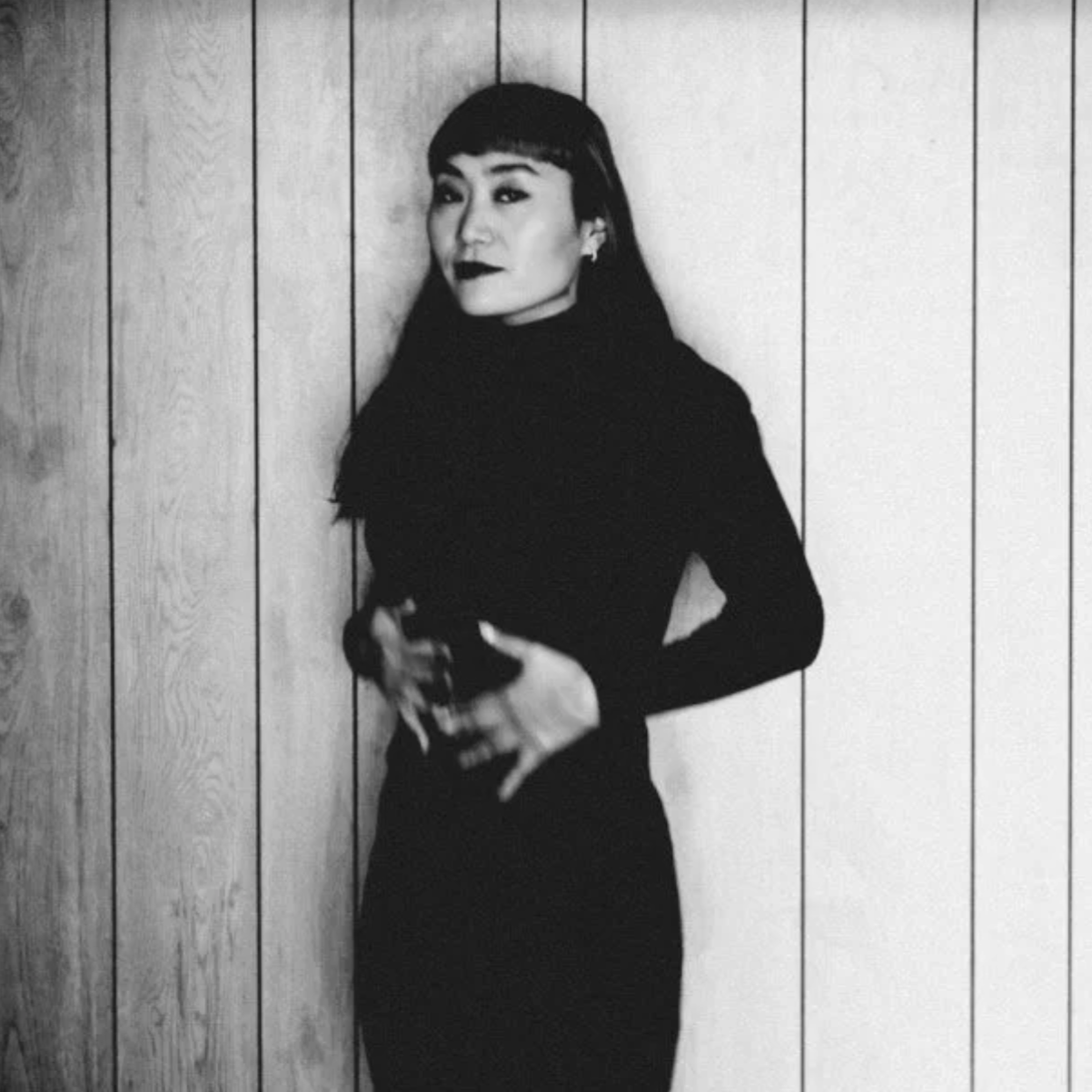
The show has been almost a year in the making, the 60 piece-collection coming together from as far back as 2018. That’s the year, Takeuchi says, she first felt proud of a piece of art she had created. It was the moment that she knew she would continue creating her artwork in a serious way. This seminal piece was the first in a long line of work that makes up “Emotional Stem”.
Today, “Emotional Stem” sends Takeuchi on a gentle ride through the past. The term “Emotional Stem” recalls not only one’s emotions, but said emotions ‘stemming’ from one’s own memories and senses. Her creative process is at once intrinsic and spontaneous, the visual sits in her mind and her own hands make it real. Takeuchi begins each piece with a void-esque black canvas before adding her gold leaf, then her ink pen drawings on the warm milieu. Takeuchi is the most excited about pieces where the gold leaf does what she wants it to- where the adhesive guides the medium the way she originally intended. Other times, and more often, the gold leaf challenges her to create new shapes, to explore new avenues of getting her vision across. These pieces too, Takeuchi says, come together in a harmonious way that she only can see once it’s finished. “The part I love the most about my process is putting down the gold leaf because it’s always surprising.” It’s arguably the most important motif across her works, so she takes her time with it.
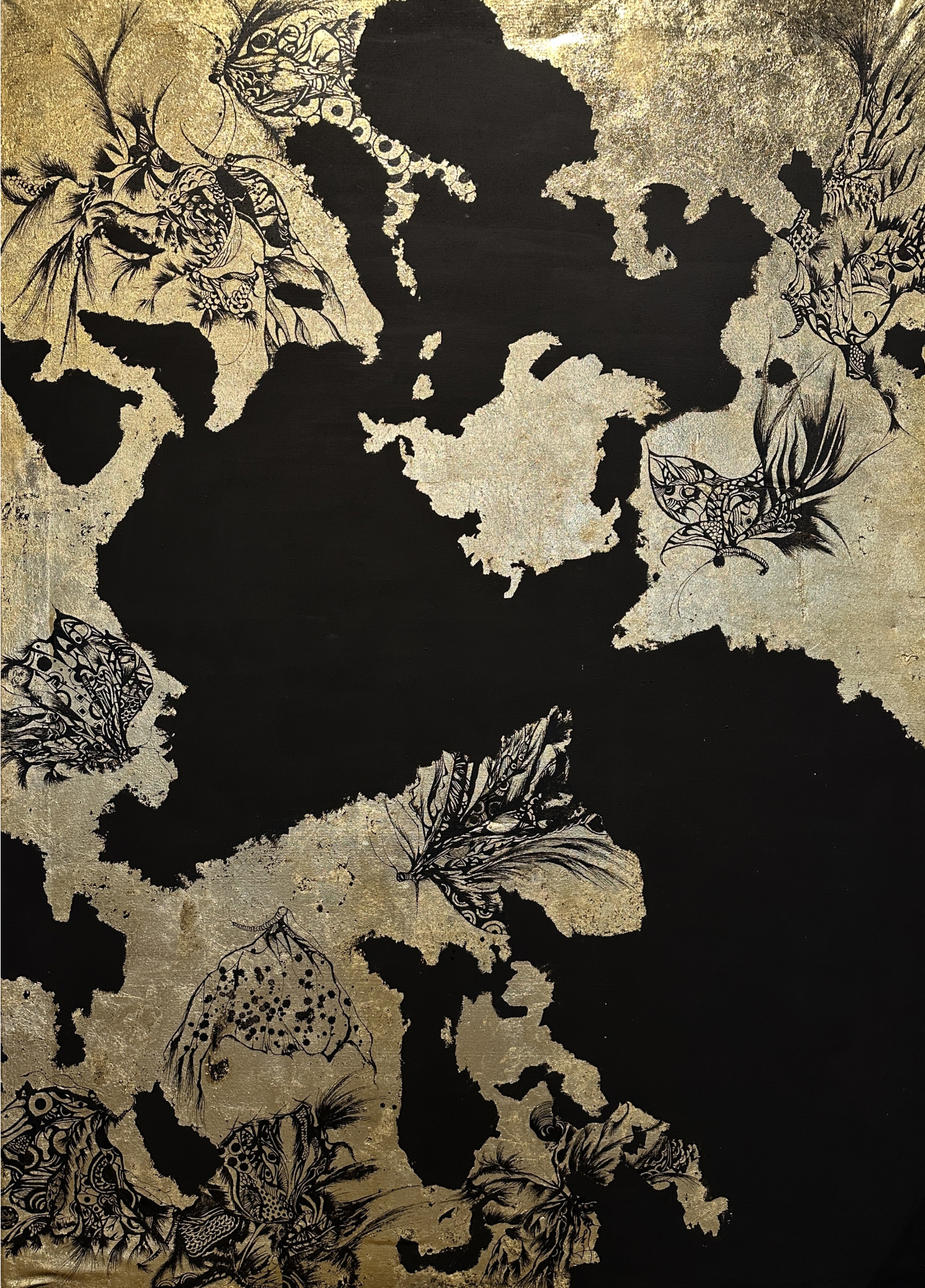
Life, 2024
As a young child, Takeuchi often went on family trips to the countryside in Japan. She would visit hot springs and local museums, along with the working studios of local artisans. The usage of traditional methods and iconography in those countryside studios fascinated a young Takeuchi as she peered in. These peeks at the artists at work were among the moments of her life that influenced her desire to pursue art and design as an adult. When we talk about artistic inspiration, Takeuchi also says a specific film “grasped at her heart” and influenced her greatly. Death in Venice (1971), with it’s hazy beauty and outstanding visual aesthetics greatly impacted a 6th grade-bound Takeuchi, and specifically, the usage of Mahler’s Symphony No 5 Adagietto. She says the piece can be heard playing to this day in her studio, where she channels that memory of the first time she heard it, and uses it to create new pieces.
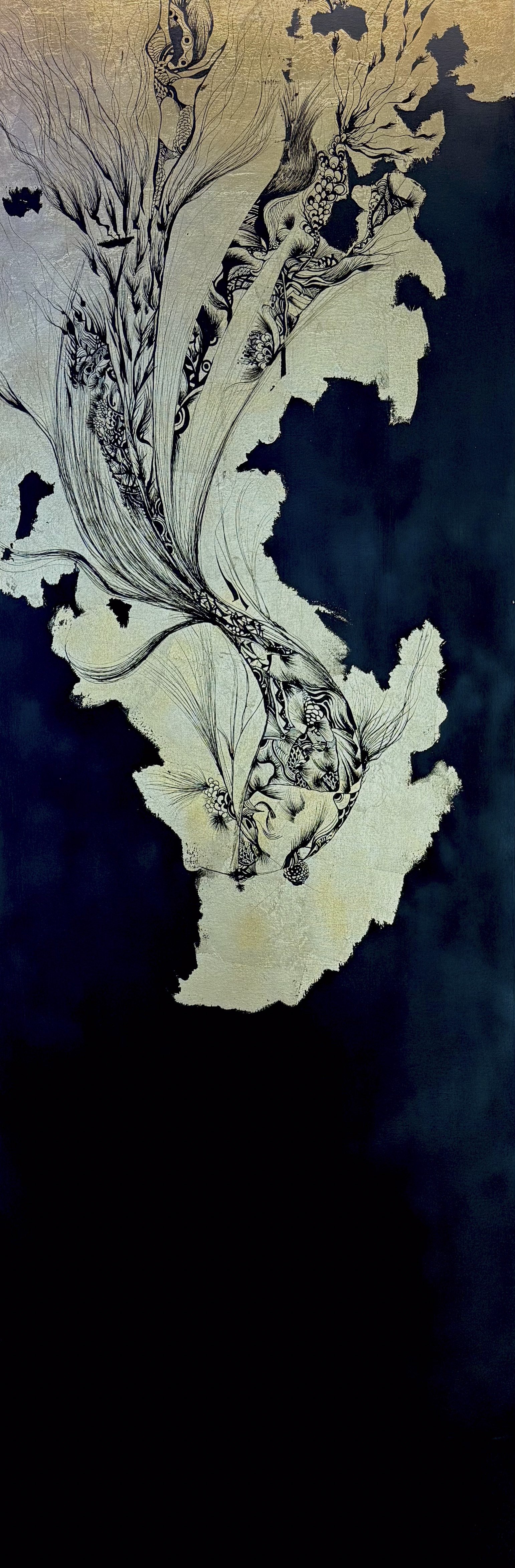
Takeuchi’s usage of black and gold are consistent through her catalogue, along with her distinctive line work. The volume of each line changes with the stroke almost as if it was Kanji calligraphy, as if her ancestral language comes out in her visual language. “As a Japanese person, doing calligraphy is part of us because we learn when we are so little. So I’m definitely influenced by it in my work.” Takeuchi also draws visual inspiration from Itō Jakuchū (1716-1800), an mid-Edo period artist known for his experimental perspective and use of modern stylistic elements for the time. Often Jakuchū was commissioned to paint traditional Japanese iconography like fish, cranes and plum blossoms onto screen doors and onto scrolls, which hold a similar scale and subject matter to some of Takeuchi’s works like The Fleeting Life, and Butterfly.
Takeuchi is not only a visual artist, but also works as a Japanese teacher to young kids, and has two children of her own. A self-proclaimed workaholic, she is outwardly grateful to her children for recognizing her hard work and for doing their part. She lovingly recalls a moment where her then 9 year-old son, noticing her desire to bring her artwork to the forefront of her life, took a moment to tell her “We only live once,” and to do what makes her happy. She gloats about her daughter’s cooking skills and meals she makes for the three of them, and they always take time to enjoy them together. Takeuchi emphasizes that her family is a team, the one whom she could never succeed without.
After a separation in 2020, Takeuchi took her creative endeavors to the next level, treating her artwork like therapy. She began asking herself what she wanted to do through her art, what did she want to express, what was she feeling? In doing so, she became an “observer of her own emotions”, and discovered through creation that her art was healing her. Takeuchi was seeing the transformation on the canvas and within herself, her own growth and evolution evident emotionally, which transformed into visual evidence like “Emotional Stem.”
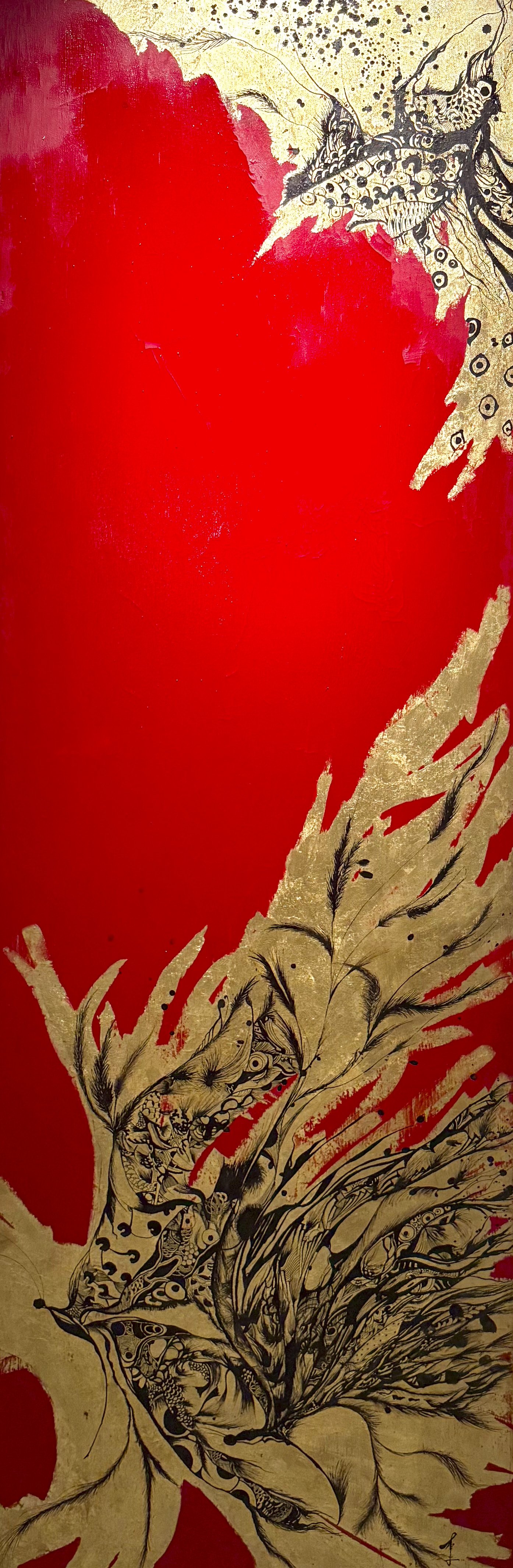
Each “Emotional Stem” piece has a reoccurring motif of fish scale-like circles reverberating over the other. The circles are filled with delicate and organic patterns, with careful line work and unmatched precision. In the beginning of the series, Takeuchi had limited time to create her art during the day, which would culminate in extended nights at the studio. After long days, she would walk into her studio, turn a light on, and deal with it all in these small spheres, which she says was like “keeping a journal.” Takeuchi would make it a mission to finish one circle a day, with each one becoming a reflection of her emotions and memories of the day that had passed. “Life is about the accumulation of all these memories and complex emotions, good and bad and everything in between, and each one would create new stems. Plant stems draw water from the ground to make flowers bloom, emotions draw from life to make the person themselves.”
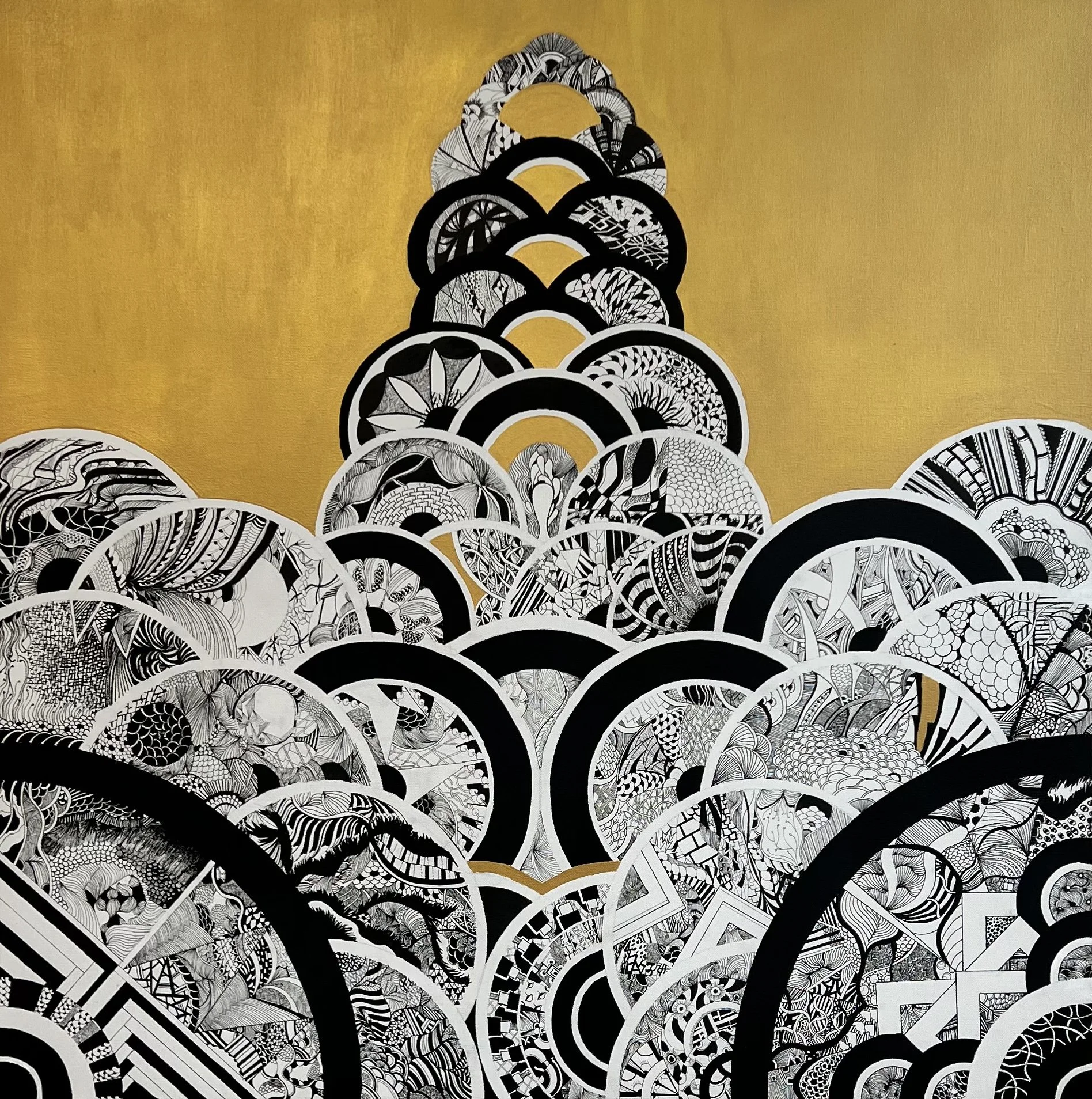
Emotional Stem, 2020
Living in Atlanta, Takeuchi has been welcomed with open arms into the local arts scene. She rented her first studio space in 2018 at the MetATL and quickly made friends and colleagues that remain by her side to this day. After 2020 she moved studios over to Traber street, where she would meet Anderson Smith for the first time. They forged a friendship and mutual respect for each other’s work, and in 2024 Takeuchi became the first female artist to do a solo show at Gallery Anderson Smith. And as cyclical as life and the “Emotional Stem” circles, exactly two years to the day Takeuchi closed her debut show in Buckhead Village, “Emotional Stem” opened in Midtown Atlanta.
Kyoko Takeuchi is one of the long-time champions of Gallery Anderson Smith with her distinctive perspective, her disciplined creative practice and unmatched talent. You can come see “Emotional Stem” at Gallery Anderson Smith in Midtown until February 21st, 2026.
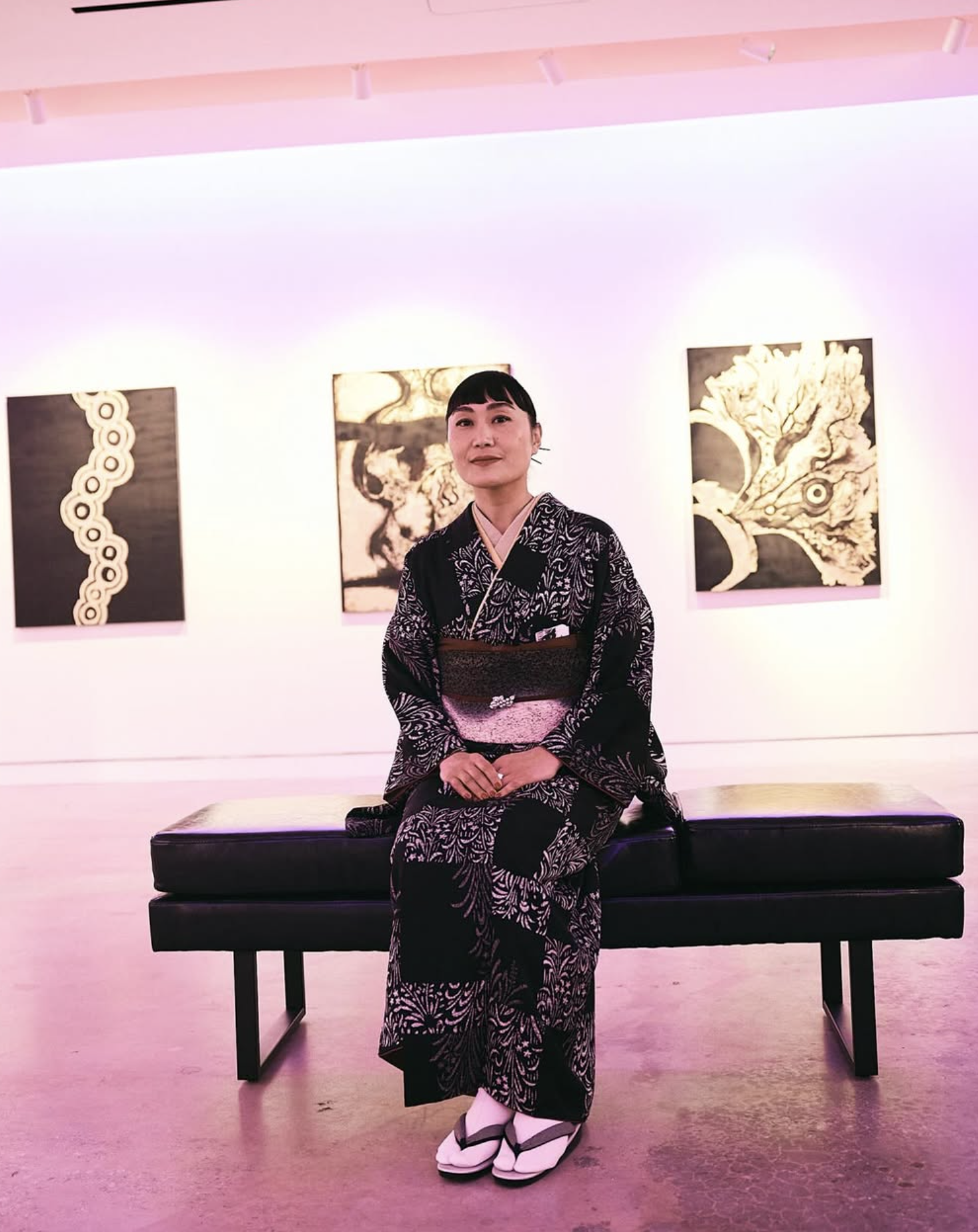
Reserve a spot at Kyoko’s artist talk and closing reception on 2/21/26 from 6-8pm here.
Written by Camilla Schiappa February 11, 2026.